
In an ever-evolving economic landscape, understanding the intricate relationship between inflation and construction loan interest rates is crucial for both builders and investors. As inflation rises, it can significantly impact the cost of borrowing, making it essential to stay informed about how these two factors interact.
This article explores the nuances of inflation’s effect on construction loan rates, delves into the economic trends that shape this connection, and examines the essential role of central banks in managing monetary policy. By reviewing historical data and offering future predictions, we aim to equip readers with valuable insights that can inform their decision-making in the construction financing arena.
Whether you’re a seasoned professional or a first-time builder, grasping these concepts is vital to navigating the complexities of the current market.
Understanding Inflation’s Impact On Construction Loan Interest Rates
Inflation is a critical economic factor that significantly affects various sectors, including real estate and construction. Understanding the link between inflation and construction loan interest rates is essential for both borrowers and lenders. When inflation rises, the purchasing power of money decreases, leading to higher costs for materials, labor, and overall project expenses.
As construction costs escalate due to inflation, lenders often respond by increasing interest rates on loans. This adjustment is a way for financial institutions to maintain their profit margins in the face of rising costs. Consequently, higher construction loan interest rates can impede developers’ ability to finance projects, potentially leading to a slowdown in construction activity.
Moreover, inflation also influences the Federal Reserve’s monetary policy decisions. When inflation rates are high, central banks may opt to increase interest rates to curb spending and stabilize the economy, which in turn affects loan affordability. Therefore, as inflation continues to fluctuate, understanding how it impacts construction loan interest rates becomes crucial for stakeholders in the construction industry.
Navigating the link between inflation and construction loans requires a keen awareness of market trends and economic indicators. By keeping an eye on inflation data and understanding its implications, borrowers can make more informed decisions about their financing options in the fluctuating economic landscape.
How Economic Trends Influence The Link Between Inflation And Interest Rates
Understanding how economic trends influence The Link between inflation and interest rates is crucial for anyone involved in the construction sector, especially when taking out loans. Economic indicators such as GDP growth, unemployment rates, and consumer spending play vital roles in shaping these financial dynamics.
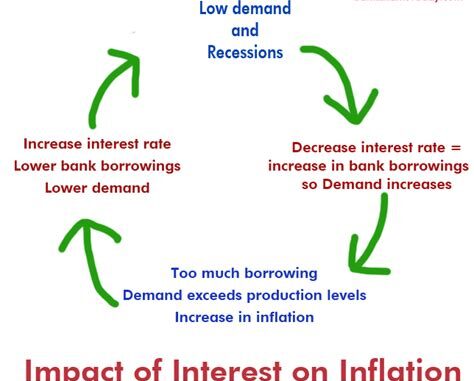
When the economy is thriving, increased consumer spending leads to higher demand for goods and services. This demand often results in price increases, contributing to inflation. In response, central banks may raise interest rates to combat inflation, which directly impacts construction loan interest rates. Higher interest rates increase borrowing costs, making construction projects more expensive and potentially slowing down development initiatives.
Conversely, during economic downturns, inflation typically decreases, prompting central banks to lower interest rates to stimulate borrowing and investment. This can result in lower construction loan interest rates, encouraging new projects and expansions. The cyclical nature of these economic trends maintains a continuous interaction between inflation and interest rates, highlighting the importance of closely monitoring economic indicators for informed financial planning.
Close attention to economic trends helps stakeholders understand how The Link between inflation and interest rates evolves, ultimately influencing decisions related to construction financing and project development.
The Role Of Central Banks In Managing The Link Between Inflation And Loans
Central banks play a crucial role in managing The Link between inflation and construction loan interest rates. They are responsible for implementing monetary policy that influences economic stability, which directly affects the cost of borrowing. Understanding their methods can clarify how they attempt to stabilize the economy in times of inflation.
One of the primary tools central banks use is the manipulation of interest rates. When inflation rises, central banks often increase the benchmark interest rates to cool down spending and borrowing. This, in turn, affects construction loan interest rates as lenders typically adjust their rates according to the central bank’s rate changes. As construction projects can span several months to years, the cost of financing these projects can become significantly impacted when interest rates fluctuate.
Additionally, central banks monitor economic indicators closely, including inflation rates, unemployment rates, and GDP growth. Their decisions are based on these factors to ensure that they maintain target inflation levels, which directly influences The Link between inflation and loan costs. For example, during economic expansions, inflation typically rises, prompting central banks to act to prevent overheating by raising interest rates. Conversely, during economic downturns, they may lower rates to spur growth.
Furthermore, central banks communicate their policies and expectations to the market, which can affect investors’ and borrowers’ perceptions. This communication can lead to anticipatory adjustments in construction loan interest rates, even before actual policy changes are made. By managing The Link through these mechanisms, central banks aim to foster a stable economic environment conducive to growth and sustainable construction financing.
Comparing Historical Data: The Link Between Inflation And Construction Loan Costs
Examining historical data reveals a significant correlation between inflation rates and construction loan interest costs. Over the decades, periods of high inflation have traditionally led to increased interest rates on loans, particularly in the construction sector. This link can be attributed to several factors, including the increased cost of materials and labor, which often rise during inflationary periods.
For instance, in the late 1970s and early 1980s, the United States experienced soaring inflation rates. During this time, construction loan rates climbed alongside inflation, creating a challenging environment for builders and developers. Historical data shows that when inflation approached double digits, construction loan interest rates mirrored this surge, often exceeding 18% in some cases.
Conversely, periods of low inflation, such as the early 2000s, provided a more favorable landscape for borrowing. Construction loan interest rates fell significantly as inflation dipped below 3%, resulting in more accessible financing options for construction projects. This trend illustrates how the link between inflation and construction loan costs can impact the overall economic climate, affecting both investors and consumers alike.
To further analyze the historical relationship, we can examine a table summarizing key inflation rates and corresponding construction loan interest rates over selected decades:
| Decade | Average Inflation Rate (%) | Average Construction Loan Interest Rate (%) |
|---|---|---|
| 1970s | 7.4 | 11 – 18 |
| 1980s | 5.5 | 12 – 20 |
| 1990s | 3.0 | 7 – 9 |
| 2000s | 2.6 | 5 – 6 |
| 2010s | 1.5 | 3 – 5 |
This data not only highlights the link between inflation and construction loan costs over time but also serves as a basis for understanding how future trends may play out in a fluctuating economic landscape. Such insights are critical for developers and investors who must navigate the complex dynamics of inflation and financing in the construction industry.
Future Predictions: The Expected Link Between Inflation And Construction Loan Rates
As we look ahead, the relationship between inflation and construction loan interest rates is expected to evolve significantly. Several factors suggest that the link between these two economic elements will become increasingly complex.
Firstly, analysts project that inflation rates may stabilize or even decline in the coming years, driven by potential changes in global supply chains and monetary policies. This stabilization could lead to a reduction in construction loan interest rates, making borrowing more cost-effective for developers and homeowners alike.
However, the outlook is not entirely optimistic. If inflation rates rise unexpectedly due to factors such as geopolitical tensions or supply shortages, we could see a corresponding increase in interest rates. Under such scenarios, lenders might tighten their credit standards, further impacting the cost of borrowing.
Moreover, the actions of central banks will continue to play a crucial role in shaping future trends. If central banks take a hawkish approach, increasing interest rates to combat inflation, this will solidify the link between rising inflation and climbing construction loan rates. In contrast, a dovish stance could result in lower rates, encouraging a surge in construction activity.
Overall, stakeholders in the construction sector should keep a close eye on macroeconomic indicators and policy changes to better anticipate how the link between inflation and construction loan rates will affect their projects in the near future.

Frequently Asked Questions
What is the primary relationship between inflation and construction loan interest rates?
Inflation influences construction loan interest rates as lenders increase rates to compensate for the decrease in purchasing power and the potential for rising costs in the future.
How does high inflation affect borrowers seeking construction loans?
High inflation often leads to higher interest rates, which can result in increased monthly payments and overall borrowing costs for borrowers.
Are construction loan interest rates typically fixed or variable during periods of high inflation?
Construction loans can be either fixed or variable, but during periods of high inflation, variable rate loans may be especially risky as they can increase over time.
What strategies can borrowers employ to mitigate the impact of rising interest rates during inflationary periods?
Borrowers can consider locking in a fixed rate loan, seeking government-backed loans, or negotiating terms that can provide financial flexibility in uncertain economic times.
How do economic policies influence both inflation and construction loan interest rates?
Economic policies such as monetary policy and fiscal stimulus can affect inflation levels, which in turn influence construction loan interest rates as lenders adjust to economic conditions.
What historical trends exist between inflation rates and construction loan interest rates?
Historically, there tends to be a correlation where rising inflation is followed by increasing construction loan interest rates, reflecting the cost of borrowing in a less stable economic environment.
What role do economic indicators play in anticipating changes in construction loan interest rates?
Economic indicators like the Consumer Price Index (CPI), employment rates, and central bank policies are crucial for predicting trends in both inflation and construction loan interest rates.
Leave a Reply